Administer the documents
RFIs, shop drawings, product data, samples, revisions, and a current record of decisions.
Construction administration (CA)
PRM performs construction administration to carry architectural and engineering intent through procurement, construction, and closeout. CA services include RFIs, submittal review, site observations, progress documentation, change review, payment-application review, punch lists, and completion administration as defined in the agreement.
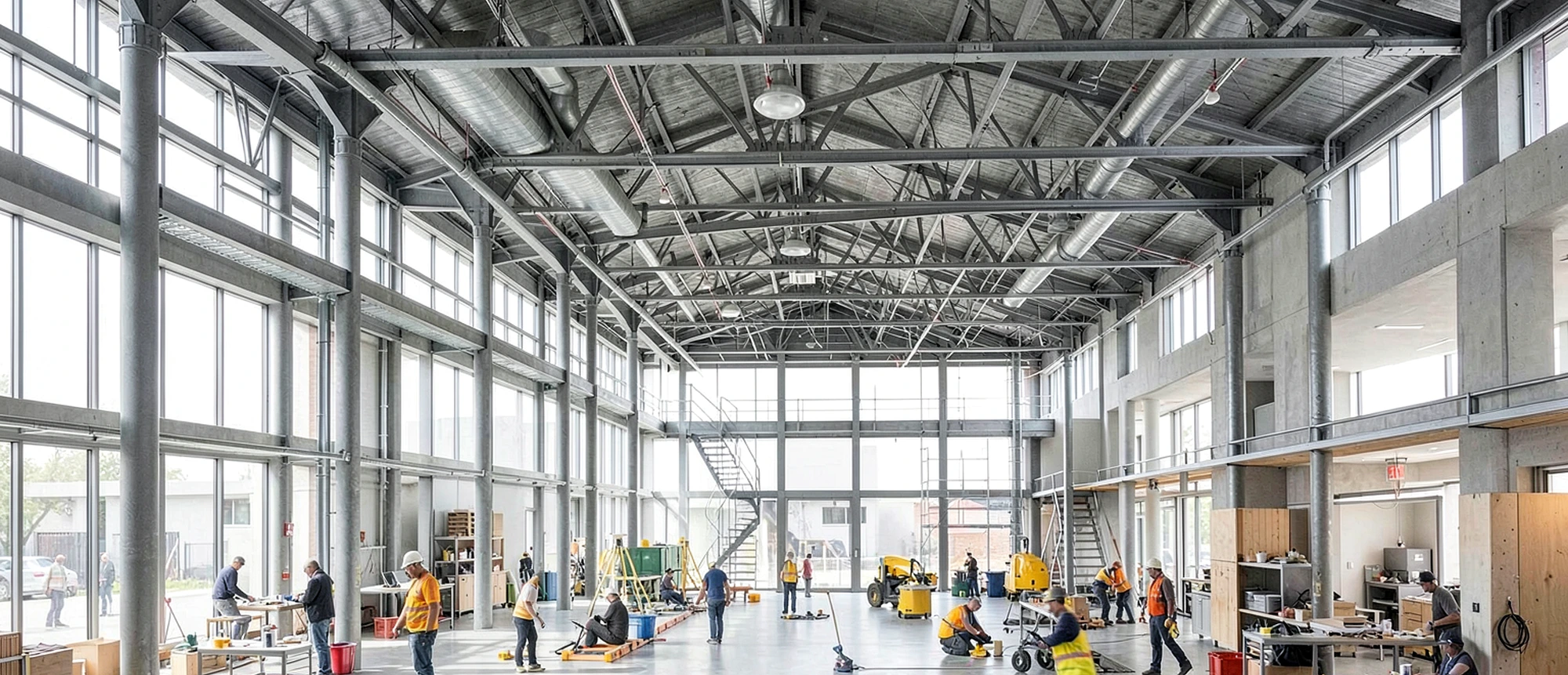
Clear responses, documented decisions, and continuity from the issued drawings to project completion.
What PRM brings
RFIs, shop drawings, product data, samples, revisions, and a current record of decisions.
Site observations, progress reporting, change evaluation, and payment-application review within the agreed scope.
Punch lists, completion reviews, closeout documents, and warranty follow-up.
PRM establishes the construction-administration process around the contract documents, delivery method, and project participants. The team confirms document channels, review responsibilities, response targets, meeting cadence, and the records needed to support decisions. This gives owners, designers, and builders a common process for moving information through construction.
PRM reviews requests for information against the drawings, specifications, and known site conditions. Responses are coordinated with the affected disciplines and identify when a clarification requires a revised detail, additional investigation, or a formal change. The response and any resulting action stay connected to the original question.
PRM reviews the submittals assigned to its CA scope for consistency with the design intent and contract requirements. Reviews consider the interfaces between products, dimensions, performance requirements, equipment, and other disciplines. Proposed substitutions are evaluated with their documented cost, schedule, performance, and coordination effects.
PRM performs scheduled site observations within the agreed CA scope and records observed progress, design questions, and apparent departures from the contract documents. Reports identify the location, relevant requirement, responsible party, and follow-up action. Observation frequency and the roles of site supervision, testing, and inspection are established for the project.
PRM reviews proposed changes and their supporting information within the authority assigned by the agreement. Technical review is connected to scope, cost, and schedule effects so the owner can make an informed decision. Where included, PRM reviews payment applications against reported progress and the applicable contract requirements.
PRM assists with completion reviews, punch-list preparation, correction tracking, and the closeout documents assigned to its role. Required manuals, warranties, record information, testing records, and training documentation are checked for completeness. Warranty-period reviews and follow-up can be included in the agreed scope.
NbotaiOS supports PRM's CA work by organizing the current drawings, correspondence, RFIs, submittals, review status, and action records in the project context. AI assistance can help summarize information and identify items needing review. PRM's responsible team reviews technical responses and makes the project decisions.
Working relationship
Share the contract documents, construction schedule, current review logs, project participants, and the level of site involvement required. PRM will define the review services, visit frequency, deliverables, and contractual authority for the assignment.
Common questions
Construction administration maintains the link between the contract documents, design intent, and construction records. Construction management organizes delivery, cost, schedule, procurement, and coordination. PRM also performs the construction itself. These services can be combined or separately defined, with the role and authority of each participant stated in the agreement.
Yes. PRM can assess the current drawings, contracts, construction status, and open issues and establish a defined CA scope for the remaining work.
Bring the real constraint
Share the location, current documents, target milestone, and the decision that cannot slip.
Start the conversation