Plan the work
Gravity and lateral system coordination. Foundation concepts informed by geotechnical recommendations.
Structural engineering
PRM coordinates foundations, framing, structural modifications, and equipment support with the architecture and building services. Structural work starts with the actual loads, available information, and the conditions that govern construction.
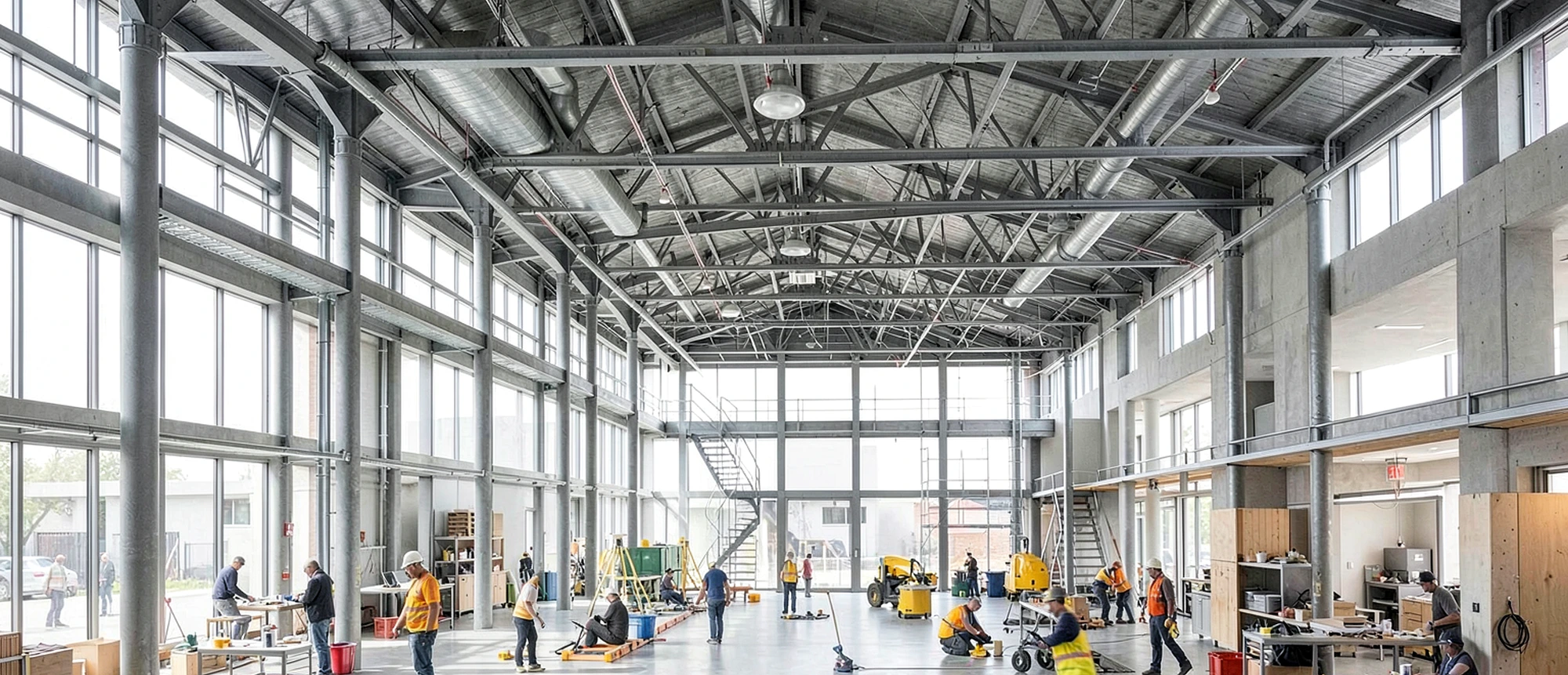
Clear scope, coordinated information, and accountable decisions from planning through delivery.
What PRM brings
Gravity and lateral system coordination. Foundation concepts informed by geotechnical recommendations.
Foundation and framing plans, sections, and schedules. Member, support, anchorage, and connection requirements.
Structural calculations and documentation appropriate to the assignment. Shop drawing and product submittal review within scope.
New work and modifications require a clear understanding of the supporting system. The team reviews proposed uses, geometry, loading, available records, and site information. Existing conditions and concealed construction are identified for verification before assumptions become permanent design decisions.
Structure is developed around load transfer, stability, serviceability, and construction interfaces. Architectural openings, MEP penetrations, equipment locations, and service clearances are coordinated before document release. Steel, concrete, masonry, and wood solutions are evaluated as appropriate to the project.
PRM helps keep structural design intent connected to submittals, fabrication questions, and field conditions. Requested changes are reviewed for their effect on connected systems and documented through the agreed revision process. Temporary works and specialty engineering responsibilities are identified in the scope.
Working relationship
PRM tailors the deliverables, participating disciplines, and level of support to the assignment. Share what is available; the team will identify missing inputs, confirm responsibilities, and define the next useful milestone.
Common questions
Yes. PRM can coordinate this scope with the other architecture, engineering, BIM, and construction services required for the project. The proposal identifies the included deliverables, responsibilities, assumptions, and milestones.
Send the current drawings, open issues, review comments, and immediate deadline. PRM will first assess the available information and define a practical scope for joining the work.
Bring the real constraint
Share the location, current documents, target milestone, and the decision that cannot slip.
Start the conversation